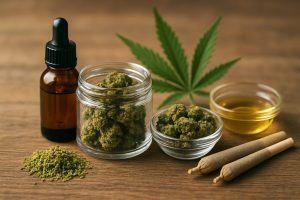
What Makes Hemp Different From Cannabis?
Few topics create more confusion than the difference between hemp and cannabis. The two words are often used interchangeably in news articles, online…

Few topics create more confusion than the difference between hemp and cannabis.
The two words are often used interchangeably in news articles, online discussions and everyday conversations. As a result, many people assume hemp and cannabis are completely different plants, while others believe they are exactly the same thing.
The reality is a little more nuanced.
Understanding the relationship between hemp and cannabis is important because it helps explain why hemp has become such a significant agricultural crop and why hemp-derived products have become increasingly popular throughout the UK and around the world.
As consumer interest continues to grow, separating fact from fiction has never been more important.
Why So Many People Get Confused
One reason confusion exists is because the word “cannabis” is often used as a broad term.
Cannabis refers to a family of plants that includes a variety of different cultivars grown for different purposes.
Hemp is one of those cultivars.
In simple terms, hemp belongs to the wider cannabis family but has been cultivated and developed for entirely different uses.
Historically, hemp was grown for practical purposes such as fibre, rope, textiles, paper and seed production. Modern cultivation has expanded these applications even further, creating a diverse range of products that utilise different parts of the plant.
Because both hemp and other cannabis varieties originate from the same plant family, they naturally share many visual similarities.
This is where much of the confusion begins.
A Plant With A Long History
Hemp has a surprisingly long history.
Long before modern wellness products existed, hemp was cultivated for industrial and agricultural purposes across many parts of the world.
Its fibres were used to produce rope, sails, clothing and other durable materials.
In fact, hemp was considered such an important crop that entire industries were built around its cultivation and processing.
Farmers valued hemp because it grew relatively quickly, adapted well to different environments and provided multiple useful raw materials from a single crop.
This historical significance is often overlooked when discussing hemp today.
Many people associate hemp exclusively with modern wellness products despite its extensive agricultural history.
The Importance Of Hemp Cultivation
One of the reasons hemp remains important today is its versatility.
Few crops can provide as many different applications from a single plant.
Different parts of the hemp plant can be used for:
- Fibre production.
- Textiles.
- Building materials.
- Food products.
- Seed oils.
- Cosmetic ingredients.
- Hemp-derived extracts.
This versatility has helped fuel renewed interest in hemp cultivation across many countries.
As sustainability becomes an increasingly important consideration, hemp’s broad range of uses continues to attract attention from both businesses and consumers.
Why Hemp Has Become More Visible
For many years, hemp remained largely out of sight for the average consumer.
While it continued to be used in various industries, relatively few people encountered hemp products directly.
This changed dramatically with the growth of the hemp-derived wellness market.
As consumer awareness increased, hemp became a much more visible part of everyday life.
Products derived from hemp began appearing in health stores, supermarkets, online retailers and specialist wellness shops.
This increased visibility encouraged consumers to learn more about hemp and ask questions about how it differs from other cannabis varieties.
Understanding Hemp’s Unique Position
Hemp occupies a unique position within the wider cannabis family.
Although it shares a common botanical background with other cannabis cultivars, its commercial uses are often very different.
Modern hemp cultivation is typically focused on producing products derived from:
- Hemp fibre.
- Hemp seed.
- Hemp seed oil.
- Hemp extracts.
- Industrial hemp materials.
This broad range of applications demonstrates why hemp has become such an important crop in its own right.
Rather than serving a single purpose, hemp contributes to multiple industries simultaneously.
The Rise Of Consumer Education
The growth of hemp-derived products has created a greater need for consumer education.
Many first-time buyers encounter hemp through wellness products and naturally want to understand more about where those products originate.
Questions often include:
- What is hemp?
- How is hemp grown?
- What makes hemp unique?
- Why is hemp used in so many products?
These questions reflect a broader trend within modern consumer behaviour.
People increasingly want to understand not only what they are buying but also where it comes from and how it is produced.
This shift has encouraged companies to provide more educational resources and greater transparency regarding hemp cultivation and processing.
Hemp Beyond Wellness Products
One of the most interesting aspects of hemp is how often its non-wellness applications are overlooked.
While hemp-derived wellness products receive significant attention, hemp continues to be used in many other sectors.
Examples include:
- Textiles.
- Construction materials.
- Paper products.
- Animal feeds.
- Sustainable packaging.
- Personal care products.
This diversity highlights the remarkable versatility of the crop.
In many ways, hemp’s industrial potential is just as impressive as its role within the wellness sector.
Understanding this broader context helps explain why hemp remains an important agricultural resource.
Why Sustainability Has Increased Interest In Hemp
Sustainability has become a major focus for consumers and businesses alike.
As people seek environmentally responsible alternatives, hemp has attracted increasing attention due to its versatility and efficiency as a crop.
Manufacturers continue exploring new ways to utilise hemp in products ranging from clothing and packaging to building materials and personal care items.
This growing interest reflects a wider movement towards renewable and sustainable resources.
While sustainability is only one aspect of hemp’s appeal, it has undoubtedly contributed to the plant’s growing popularity.
The Modern Hemp Industry
Today’s hemp industry is significantly more sophisticated than it was even a decade ago.
Advances in cultivation, processing and product development have expanded the range of hemp-derived products available to consumers.
At the same time, consumer awareness has grown considerably.
People are now more interested in understanding:
- Hemp cultivation.
- Product sourcing.
- Manufacturing methods.
- Ingredient transparency.
- Product quality.
This increased knowledge has helped drive industry standards higher and encouraged greater transparency throughout the marketplace.
The result is a more mature industry with better-informed consumers.
Why Hemp Education Continues To Matter
Despite the growth in public awareness, misconceptions about hemp remain common.
Many people still assume hemp and cannabis are entirely separate plants.
Others mistakenly believe all cannabis cultivars serve the same purpose.
Education plays a vital role in addressing these misunderstandings.
The more consumers learn about hemp, the easier it becomes to understand its role within agriculture, manufacturing and modern product development.
This knowledge helps create more informed conversations and reduces confusion surrounding the plant.
Looking Towards The Future
The future of hemp appears increasingly promising.
Continued innovation is creating new opportunities for hemp-based products across multiple industries.
As consumer awareness grows, demand for transparency and education is likely to increase as well.
This combination of innovation and education will continue shaping the hemp industry for years to come.
Whether through textiles, sustainable materials, food products or wellness applications, hemp’s versatility ensures it will remain an important crop in the modern economy.
Understanding Hemp In Context
Hemp is far more than a single-purpose crop.
Its long history, diverse applications and growing importance within modern industries make it one of the most interesting agricultural resources available today.
While confusion between hemp and cannabis continues to exist, understanding their relationship helps provide valuable context for consumers seeking to learn more about the plant and its many uses.
For readers interested in learning more about hemp-derived products and the wider world of CBD, understanding the foundations of hemp cultivation is an excellent place to start.