
Sauna Settings Are a Conversation, Not a Challenge
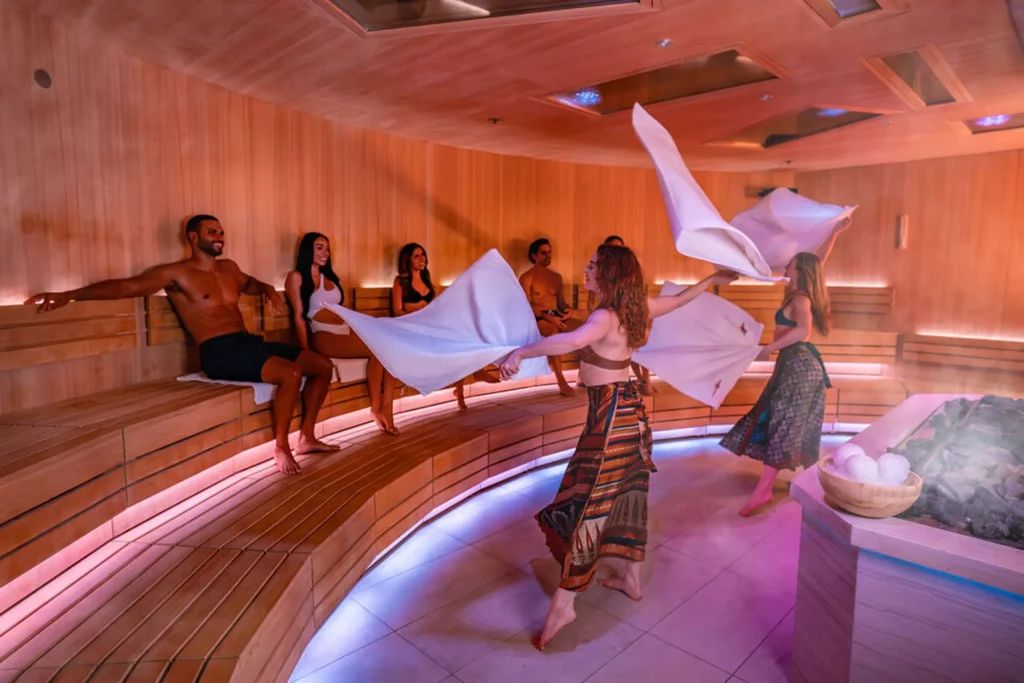
A sauna appointment should not begin with a target borrowed from somebody else’s endurance story. Ask the venue how the particular room works, obtain appropriate advice about personal suitability and understand how to leave or request help. Heat and time are not a competition. The useful standard is whether the arrangement is appropriate and understandable, not whether you can tolerate more than another guest.
Online accounts can make that distinction difficult. A person may describe the settings they used as though those numbers define the experience, while leaving out relevant circumstances and professional advice. A first-time guest does not need to recreate that account. They need clear information about the service they are actually considering.
Do not arrive with somebody else’s heat target
Begin by identifying what attracts you to the visit. You might be interested in a personal-care experience or curious about a particular venue. Keep those reasons separate from claims that a session will produce a medical benefit. This article does not prescribe sauna use for a condition or promise detoxification, weight loss or a change in health.
If you have a health condition, take medication, are pregnant or are uncertain whether heat exposure is appropriate, seek advice from the relevant healthcare professional before making the appointment. Explain your concern to the venue within its role as well. A receptionist’s description of the service should not be treated as a substitute for individualized medical guidance.
Harvard Health’s sauna safety guidance advises avoiding alcohol, not using a sauna when ill and leaving if you feel unwell. Those cautions are reasons not to turn a session into a test of resolve. Do not change medication on your own to accommodate a booking; ask the prescriber about any relevant concern.
Be wary of interpreting a stronger sensation as proof of greater value. A venue’s available settings and your suitability are not established by what someone managed to endure in a video. If a number is important to a booking decision, ask the appropriate professional what it means for the actual room and your circumstances instead of treating it as a goal.
The same applies to time. A listed session length is information about an appointment, not an instruction to remain in a heated space regardless of how you feel. Clarify the venue’s process and any advice that applies to you. You do not need to finish an imagined target to justify having booked the visit.
Understand the room before starting the clock
Ask the provider to explain the equipment, the room arrangement and the instructions guests receive. Find out who controls settings and what a guest should do if an adjustment is needed. Do not assume that every sauna works like the one you saw at a gym or in a hotel photograph. The specific setup matters more than a familiar label.
For a local option, Santé’s infrared sauna service provides a starting point for questions about a Thornhill appointment. Confirm the current arrangement directly with the spa, including the explanation provided before use and how staff are contacted. This article does not verify any particular operating temperature or claim that the service is suitable for every guest.
Ask about the route into and out of the space if that affects your decision. Where do you change? How do you leave the heated area? What assistance, if any, is available? Describe the practical need rather than relying on a broad question such as “Is it easy?” The venue can provide facts about its setup; you can decide which questions still need an answer.
Clarify what preparation instructions apply to this appointment and follow appropriate professional advice. Avoid improvising a routine from several unrelated online sources. A list that combines a friend’s habits, a promotional video and a general article may sound thorough while containing instructions that do not belong together.
If you are visiting with another person, discuss your needs separately. A shared booking should not make one guest responsible for tolerating the other’s preferences. Ask the venue how any shared arrangement works and whether it permits the choices each person needs. If it does not, another format may be more appropriate.
Make leaving part of the plan
Before beginning, know how to stop the session and where to go afterward. This is not pessimism about the visit. It removes uncertainty at a moment when you should not have to negotiate an exit or search for instructions. If you feel unwell, leave the heated space and seek appropriate help rather than trying to reach a time target.
Leave room in the schedule for an unhurried transition and any relevant instructions. A closely timed appointment afterward can create pressure to rush practical steps or ignore a concern. You do not need to reserve a whole day, but the full visit should fit your calendar without depending on everything happening at its theoretical minimum.
Ask how the venue handles an appointment that ends earlier than expected, without assuming a particular refund or service policy. Knowing the terms can help remove the feeling that you must continue merely to obtain value. Financial details are worth clarifying, but they should never become a reason to remain in an uncomfortable or unsuitable situation.
Afterward, assess whether the instructions were clear and the arrangement matched what you had been told. If you consider another visit, bring relevant observations to the appropriate professional rather than automatically increasing settings or duration. A previous experience is information, not a requirement to progress toward something more intense.
The most useful account of a sauna visit is not an endurance record. It is a clear description of how the appointment was prepared for, whether questions were answered and whether you could act on your own comfort and safety. Those are better measures than somebody else’s numbers.